
Future cold and frost waves hazard dataset
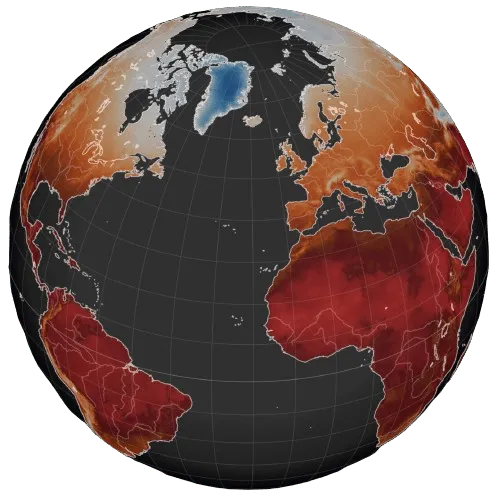
A global dataset at 0.1° resolution of six cold and frost waves hazards indicators from five climate models under three Shared Socioeconomic Pathways (SSPs) scenarios from the Intergovernmental Panel on Climate Change (IPCC) Sixth Assessment Report (AR6). The time resolution is annual from 1981 to 2100.
Cold and frost waves dataset specifications
Section titled “Cold and frost waves dataset specifications”| Specification | Description |
|---|---|
| Experiment | CMIP6 |
| Scenarios | Shared Socioeconomic Pathways SSP5-8.5, SSP2-4.5 and SSP1-2.6. |
| Climate models | The 5 models selected by the ISIMIP initiative: IPSL-CM6A-LR, GFDL-ESM4, UKESM1-0-LL, MPI-ESM1-2-HR, MRI-ESM2-0. |
| Spatial resolution | 0.1° x 0.1° Global |
| Temporal resolution | Annual from 1981 to 2100 |
| Indicators | The indicators are based on daily maximum and minimum surface temperature:
|
| Format | NetCDF, other formats possible depending on data volume |
Supplementary information
Section titled “Supplementary information”The dataset provides climate indicators that quantify the frequency, intensity, and duration of extreme cold events—such as cold waves and frost periods—under historical and future climate scenarios. Derived from daily surface temperature data, each metric is calculated using scientifically defined thresholds, including absolute values (e.g., below 0°C) and percentiles (e.g., below the 10th percentile), and is based on downscaled simulations from CMIP6 global climate models, enabling analysis across multiple spatial and temporal scales.
Future cold and frost waves dataset availability
Section titled “Future cold and frost waves dataset availability”The dataset can be delivered according to your specifications, contact us for a quote.
See all our climate projection data for the other hazards and the weather variables.